In 2024 we launched the first cohort of the Young person’s guide to systems change fellowship with a simple idea: young people needed a space to come together, ask questions and reflect on the systems that run through their lives. To understand how these systems work, why some problems persist and, above all, to think collectively about how the world could work differently.
We began this journey with a survey to understand how well young people understood the systems they inhabit. We found a lot of knowledge, but also a need to bring clarity and structure to the thoughts that were already there. That is how the idea of creating a cohort of youth interested in discussing the fundamentals of systems thinking was born. And from that cohort, we decided to create a guide. However, we soon discovered that the interest in understanding systems change went far beyond our imagination.
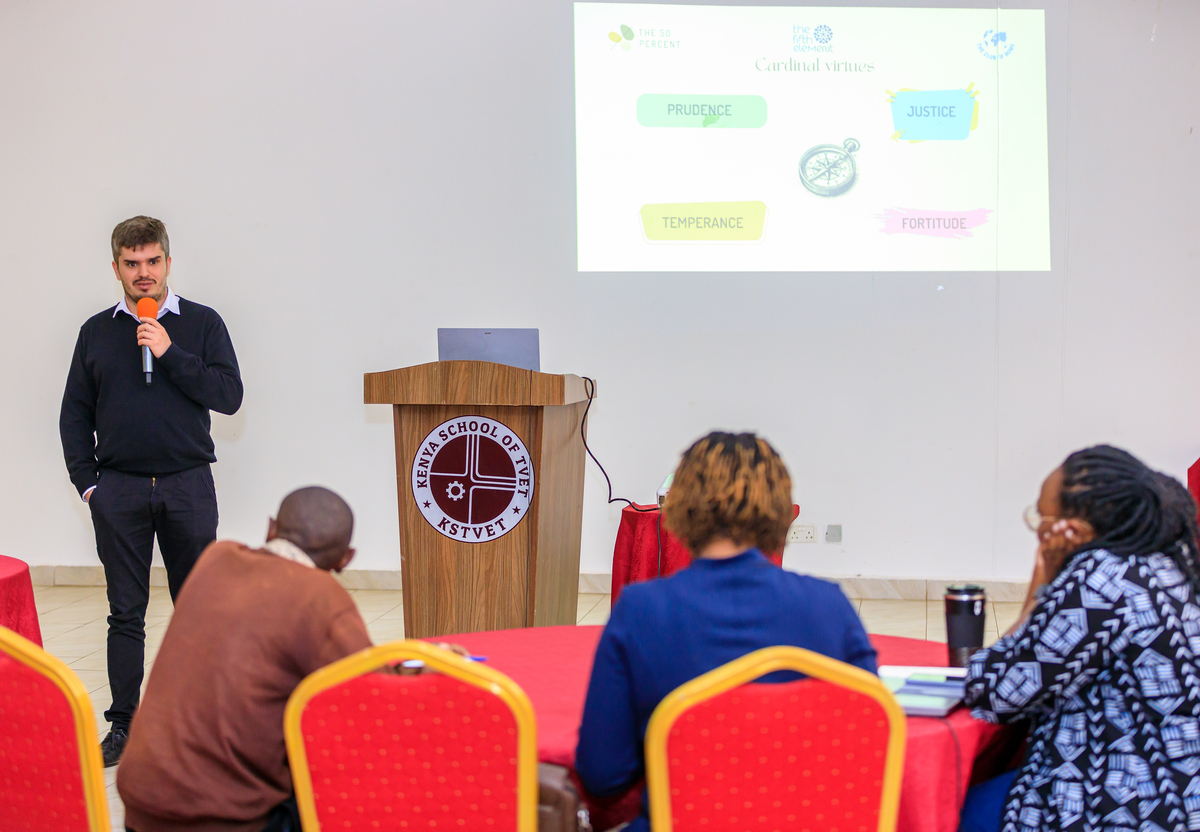
We started bringing these conversations into other spaces within our community, from our Escuela de Ciudadanía hub (Argentina) to Nairobi (Kenya), and through some cohorts in Manila (Philippines) and Dhaka (Bangladesh).
Each new experience brought different contexts, problems and questions and similarities too, and always a shared concern: young people trying to understand inequality, why the challenges that are affecting their communities seem to repeat over and over again, and what is behind what we see on the surface.
Systems change might sound like a complex concept, but together we unpacked that complexity so it began to feel closer to everyone.
Gradually, the curiosity about concepts such as systems thinking, leverage points and systems change started to take root in our conversations. The seed had been planted and was starting to grow: it was time to find new ground where it could become a tree.
Available doesn’t mean accessible
Our experience with the Nairobi hub led us to a need within the community: Day Africa, an organisation that works with young people in Kibera, Africa’s biggest slum, invited us to bring our fellowship to young people with an appetite for learning and few opportunities.
The reality, however, was different: each week the Nairobi team had to travel to share these concepts and listen to the realities that the community faces. In that neighbourhood, some human rights are not upheld; among them is the right to digital access.
This is when we began to rethink what we mean by access. We have created a guide available for free on our website. But what happens when the people who we want to reach don’t have a phone or a laptop with an internet connection?
One hard truth became clear through this experience: available doesn’t mean accessible.
Working in Kibera also meant adapting how we shared these resources. It was not about “bringing” knowledge about systems to that community but creating a space where that knowledge could meet new resources for asking questions, identifying connections and exploring the causes behind their pressing challenges.
We understood something bigger: these young people were already thinking systemically before they even knew the concept existed. Also, that tools can help us give names, connections and structures to those experiences, but knowledge of systems also lives in the people the system fails every day.
Thousands of kilometres away, a different obstacle
While these conversations grew in Nairobi, something else was happening on the other side of the world: organisations and communities across Latin America began to learn more about our work and ask how young people from their communities could take part in this path.
Once again there was interest and resources available, but this time the barrier was different: language.
The fellowship was open to young people from different parts of the world, and the guide was there for free; both, however, were only available in English.
This brought us back to the same question but in a different context: who can truly reach the tools to understand and transform the systems around them?
In Kibera, access could not depend on having a device or an internet connection. In Latin America, it could not depend on speaking English. With different obstacles, the questions remained the same.
In what language do we think about change?
Translating the Young person’s guide to systems change into Spanish (Guía para jóvenes hacia la transformación de sistemas) is one of our responses, but we understand that this is only a new beginning in our journey.
If we talk about systems change, we must be willing to apply some of its questions to our own work.
Who can reach what we create? What assumptions do we make about the people who will use our resources? Who might we be leaving out without realising it? What stands between a tool and the people who could find it useful?
It is easy to think that a free resource available online is an accessible resource. Our experience taught us that accessibility is complex, and it depends on language, technology, context, the way we explain concepts, or even if people feel that these spaces and conversations belong to them too.
Systems change begins with access
The Young person’s guide to systems change began as an experience to support young people in understanding the systems that run through their lives. Since then, they have also helped us understand something: that an available resource is only the starting point.
Making it accessible means listening, adapting and recognising that what works in one context may not work in another. It means bumping into challenges we weren’t expecting and staying willing to change how we work when necessary.
Bringing these resources to Kibera, creating a guide in Spanish and opening a learning space for Spanish-speaking young people are some steps along this path. They are not the destination. Accessibility is not something we can resolve with a few actions but a question we must keep asking ourselves.
And if we want more young people to take part in our community of changemakers, we must start by thinking about something fundamental: making sure they have access to the conversation.
(*) Lee este blog en español AQUÍ.