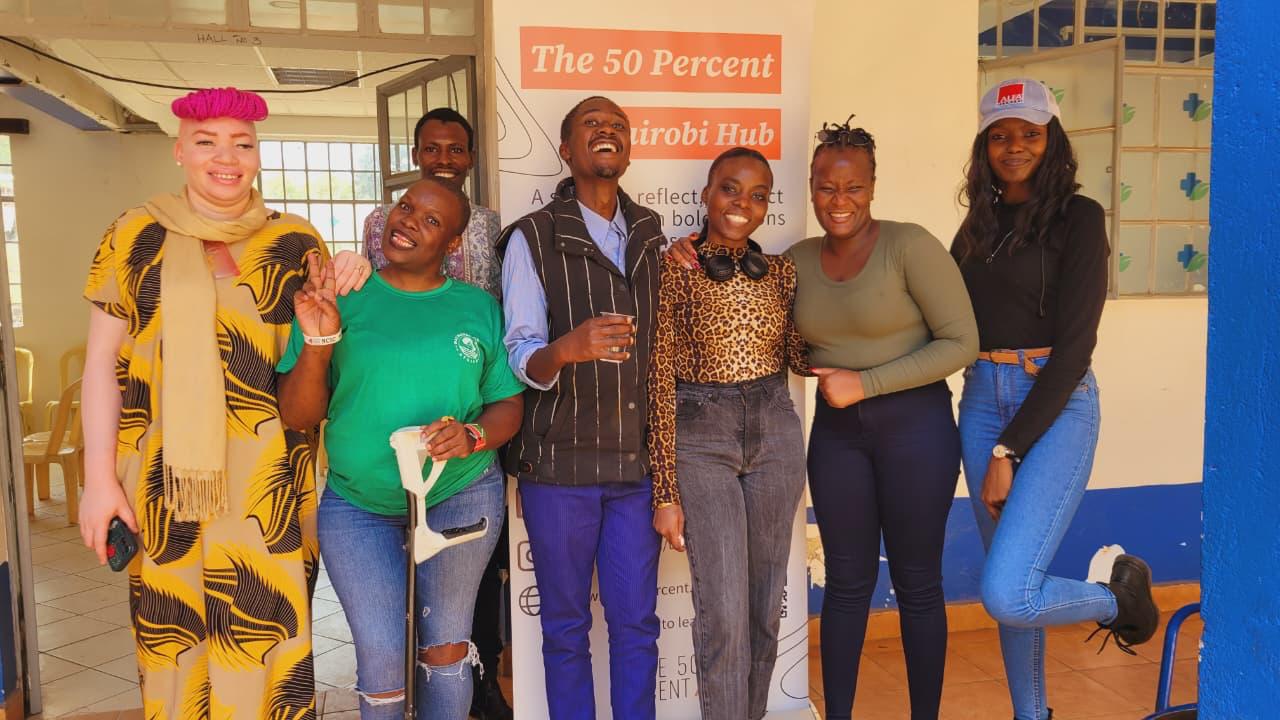
Fellows from The 50 Percent Nairobi hub spent time in Kawangware engaging residents in a community baraza to understand how waste management systems function from the ground up. What emerged was a system with multiple moving parts; each functioning yet rarely in alignment.
The session included various local actors including youth involved in waste collection, landlords, community members. It was co-partnered with Empowered Women with Disabilities, a local community-based organisation led by and for women living with disabilities, who provided insight from a vulnerable often overlooked perspective.
How waste moves
Waste in Nairobi is generated daily across household, commercial and institutional levels. In areas like Kawangware, this waste enters a fragmented chain. Some households rely on private collectors while others depend on informal youth using mkokotenis (hand-driven carts). In many cases, there is no consistent collection at all and waste is disposed of wherever possible.
From there, transport becomes uncertain. Waste is moved through informal routes, transferred between actors, or dumped at temporary holding points. Official disposal sites exist, but access is inconsistent and enforcement is weak. This creates space for illegal dumping, often in open areas, drainage lines or along road edges.
Recycling sits within this same system, but largely as an economic activity. Plastics, metals and other materials are extracted where they have resale value. What remains, often including organic waste and low-value materials, is left to accumulate and decompose or just clog up drainage systems.
Where the system breaks
During the baraza, this structure became clearer through lived experiences shared by community members. Waste was described not only as an environmental issue, but as something that blocks pathways, creates unsafe terrain, limits mobility and contributes to significant health risks.
A recurring phrase captured how waste is understood: “Waste ni waste ka umewaste”, which means ‘it’s only waste if you waste it’ and reflects a system where value determines attention. Materials are handled when they generate income. When they do not, they remain unmanaged.
Recent events across Nairobi show how the system reacts under pressure. Protests over waste accumulation have prompted rapid responses from authorities — waste cleared, sites addressed, activity resumed. But these responses are temporary. Waste is often relocated rather than processed, creating a cycle in which one cleared site leads to another emerging elsewhere. This points to a structural issue rather than a lack of effort.
Who holds power, who carries risk
Responsibility and power are not aligned. County authorities and contractors hold decision-making power, but enforcement is inconsistent. Private actors operate within the system with varying levels of oversight. Informal workers carry out essential roles without formal recognition or protection. Residents are left managing the immediate impact without influence over how the system is designed.
Information rarely flows across these levels. Many people do not know where waste goes after collection, how disposal decisions are made or what systems are in place beyond their immediate surroundings.
And yet, functional elements persist within this fragmented system. Informal collectors maintain regular movement of waste where formal systems fall short. Recycling networks operate efficiently within limited margins. Community members take responsibility for their immediate environments. These are consistent, adaptive responses but they exist without integration into a broader, accountable structure.
Seeing the system clearly
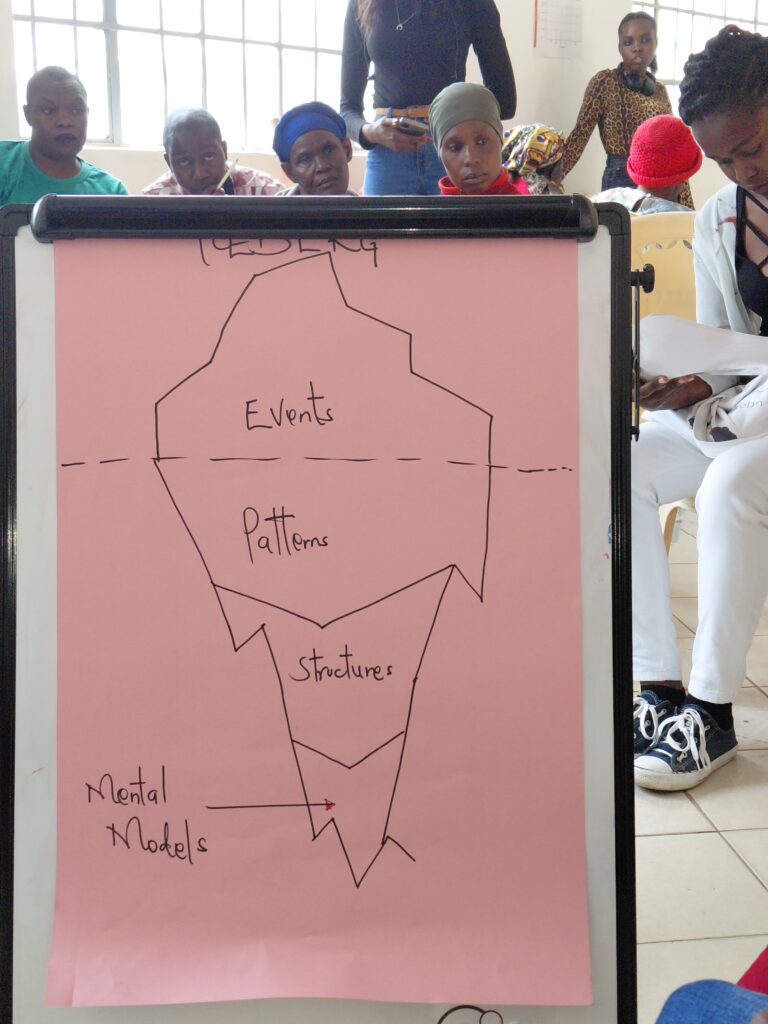
Meaningful change in Kawangware and extensively in Nairobi and Kenya, requires moving beyond reacting to visible waste problems toward intentionally redesigning the system that produces them. For both the fellows and baraza participants, this process became a lived application of systems thinking. It meant tracing how waste moves, identifying who controls different stages and understanding who benefits from the current disorder.
This approach reflects the broader work of The 50 Percent, which emphasises grounding knowledge in lived experience and using storytelling and dialogue as entry points into deeper systems analysis. By centring the community as analysts of their own normalised ways, they become capable of naming patterns, exposing power dynamics and most importantly start imagining and mapping alternatives.
This kind of analysis is the starting point for change. When communities understand the system, they are better positioned to intervene; whether through household practices like sorting, collective action or demanding transparency and accountability from those in power. Once seen clearly, it becomes possible to identify where to begin.
To support continued learning and application, pair this reflection with a curated systems thinking resource here: