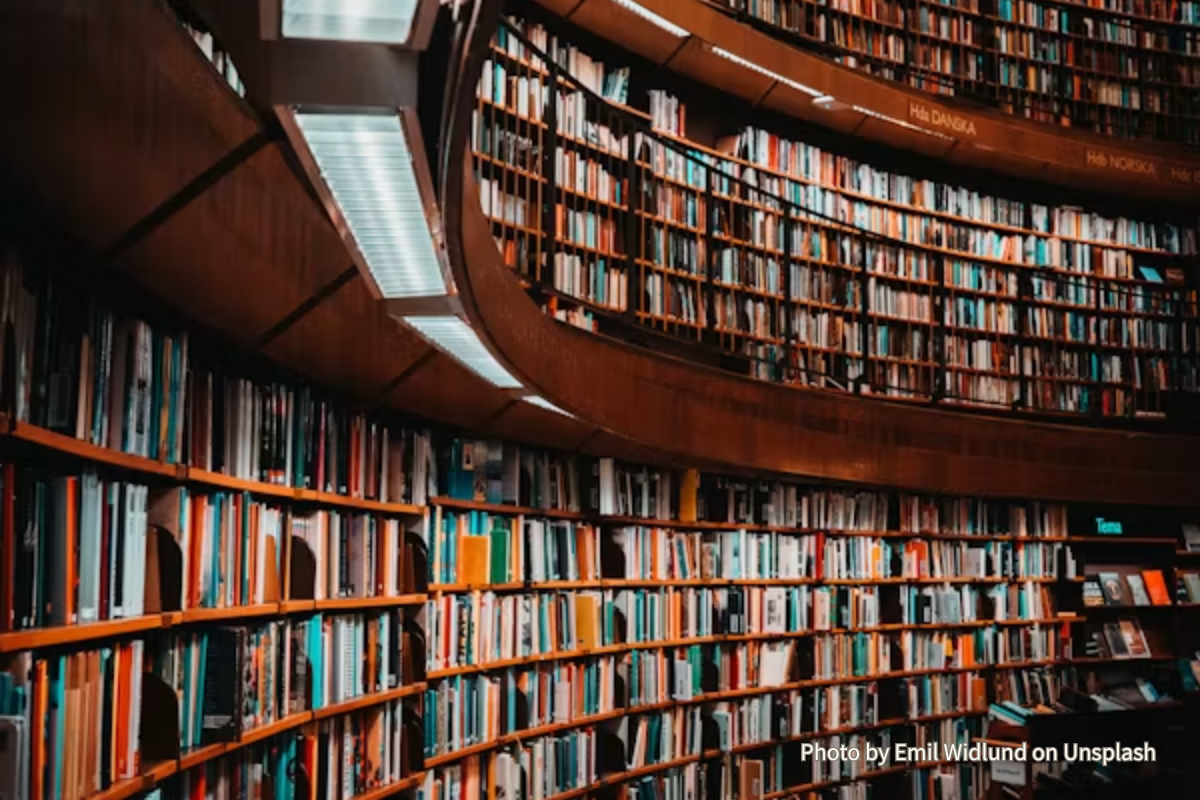
Just like many children and young people, I love to read. At my previous secondary school, I spent a lot of
my free time at the school’s library. I enjoyed reading books about historical events I didn’t know about,
social issues, and politics. Hours were spent at the library gaining knowledge which has shaped me into
the person I am today. But time spent at the library didn’t just improve my reading skills, it also helped
me learn about historical and current events, helping me make sense of the world around me. Whether it
is a news article about civic issues happening in my country and abroad or even an opinion piece on how
Beyoncé is the greatest female artist ever, I certainly do love to read.
Nigeria, with a population of over 200 million people, has a relatively small number of public libraries,
many of which are poorly equipped, outdated, or underfunded. According to the Nigerian Library
Association (NLA), the country has fewer libraries than most countries with similar populations, and
many of the existing libraries are concentrated in major cities like Abuja and Lagos, leaving rural areas
with little to no access to such services. In urban areas, while there may be libraries, they often lack the
resources or infrastructure to provide adequate services.
If not for having the privilege of attending a relatively well-resourced, federally-funded school in Lagos,
Nigeria’s largest city and commercial capital, I wouldn’t have had access to an equipped library that has
played a massive role in my growth as a learner. However, millions of Nigerian children and youth still
live in communities that do not have a single well-resourced public library, as due to the limited
resources available for local governments to build public libraries, other public services are prioritized.
There are several benefits to having a public library in a community. Public libraries offer free access to
journals, books, e-books, audiobooks, and digital databases. This levels the playing field for people,
regardless of their socio-economic background, enabling everyone to access educational materials,
research tools, and resources that might otherwise be out of reach. Libraries also help foster lifelong
learning by instilling a sense of curiosity in children, helping them to read about stories that are different
than their own, and helping them to develop critical thinking skills.
Public libraries also play a vital role in helping students of all ages with research, homework, and exam
preparation. The Nigerian educational system already poses several challenges, such as not providing
students with knowledge that would be useful to them in our increasingly digital world. Giving children
and young people access to public libraries that are accessible can help them in the long run.
We also need to promote reading among Nigerian children and youth, and for that, public libraries are
essential. Studies show that Nigerian children and youth are now reading less than previous generations.
Most of our time is now spent on our phones and tablets instead of sitting down and reading a good
book. When all communities in Nigeria have access to public libraries, children and young people across
the country may become compelled to visit them and use their resources to gain knowledge and expand
their horizons.
Additionally, public libraries provide a sanctuary for children who may face challenging home
environments. For many children, home may not always be a place of stability or encouragement for
learning. Libraries, with their welcoming atmosphere, provide a neutral ground where these children can
seek refuge from personal or family issues. They allow children to access a safe, quiet place where they
can focus on their education and personal growth, away from the distractions or stress of their daily lives.
The lack of access to public libraries in Nigeria is a serious issue that affects the social development,
education, and future prospects of youth and children across the country. Without libraries, children are
deprived of learning, creativity, and personal growth resources. To address these challenges, the
Nigerian government must fund projects to build public libraries, improve infrastructure, and promote
library services in underserved areas.
By investing in public libraries, Nigeria can provide its children and youth with the resources needed to
succeed and contribute to the country’s development. Public libraries are an investment in the future of
Nigeria’s children and youth and the country as a whole.
Article by Tariq Lawal, ‘We need more public libraries,’ originally published in March 2025 in the Access to public services and local solutions magazine by The 50 Percent.