Who has filled their hands with dirt to take care of plants, has had the luck to tune in and connect with the consciousness of nature.
Inside the native Costa Rican culture, and therefore in the Latin American culture, exists and transcends a knowledge, that has sustained many villages that were able to emerge from colonialism and declare themselves independent mid-twentieth century, being able to define their people as self-sufficient thanks to advanced food systems which nowadays are a core point in the construction of our identity.
Despite the accelerated and unbalanced development of society, this kind of food production has endured the process of miscegenation and displacement of native people, largely because of the fertile land, the intelligence of crops and the region’s favourable weather conditions. Thanks to the nutritional variety of the local crops, especially maize, in the past, local communities were nurtured spiritually and physically in a way that nowadays, although less, is still present in actual societies. However, it is at a danger of disappearing.
The risks associated with loss of production for self-consumption and the transition to monocropping is the result of a combination of factors that have happened systematically with the transformation of society. When we experience a way of living that is disconnected from the own resources that it relies on, we risk causing damages to the natural systems that sustain us.
Specifically, when we talk about maize, there are three main factors that threaten its production: the poor control and continuity of the seeds and creole varieties, high prices of agricultural inputs and unstable weather, and finally a demographic phenomenon where the younger generations are growing less interested in agricultural production. Costa Rica therefore finds itself at a turning point where its capacity to sustain the traditional food systems are being reduced in a worrying rhythm.
This loss of the national agricultural structure is very closely linked with a loss of a sense of harmony with nature, since the original practices of cropping used by the native people respected the limits and capacities of the ecosystem. Agricultural products were consumed by communities not only for nutritional purpose, but also for rituals and medical ends. This conjecture and native symbolism shared by the Latin American people is possibly the last ancestral portal that links us in body, soul and spirit.
A personal encounter with the land
I would like to share a little story of the personal experience I had sowing corn, working on an initiative with the intent of reactivating the cultivation of maize in the Paquera area in Costa Rica.
It was mid-2020 and I had just finished an exhausting period of work as an advisor for multinational companies in Latin America. I was researching the production of food worldwide, the impacts of war on cereals and the changing global productivity dynamics. I was watching the news — it was hard to watch because of the atrocities they were showing, which seemed to be more out of a movie than from our planet Earth. I sensed a message, a call to look for a physical, mental and spiritual healing.
Without further ado I knew I had to get close to the Earth. After a couple of meetings with a friend, I checked my bank account, bought a pair of rubber boots in Paquera and left to a nearby town called Vainilla. Vainilla is located inside the Archaeological region Gran Nicoya, the conservation area Tempisque and the peninsular biological corridor, which in turn borders the Matambú private forest reserve.
In this same region, further north, is located the Indigenous territory Marambú, proclaimed in 1980 by the Legislative Assembly as a protected territory of the Chorotega people, a Costa Rican ethnicity with significant heritage links to maize planting and the mystic significance of their rituals and religious ceremonies.
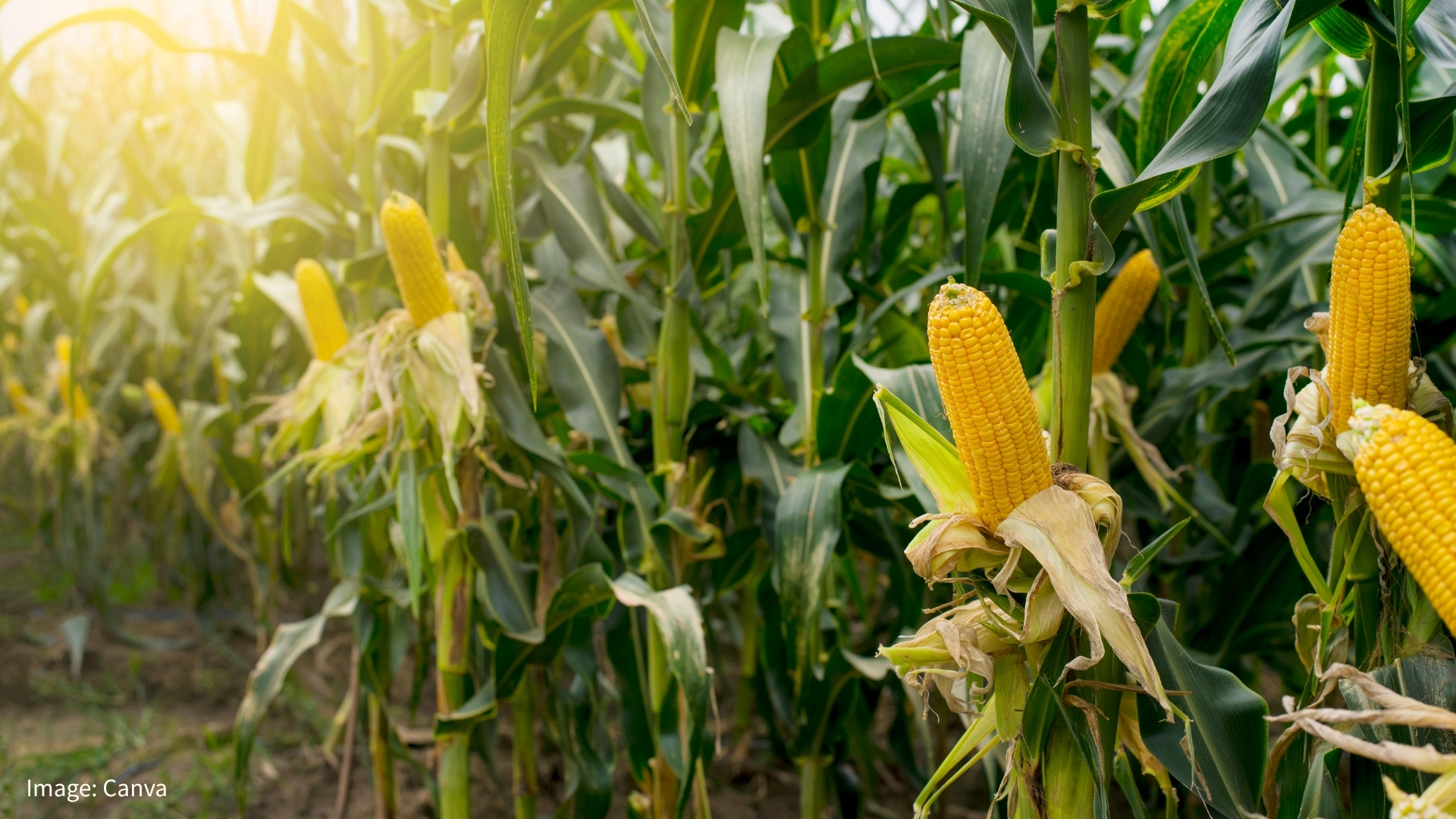
During my stay in Vainilla, I rented a cabin that was at least one hundred years old. After several weeks of preparing the soil, we were ready to sow the seeds and all that remained was to wait for the rain. The sowing process was a dance, a tribal one, a competition, a rhythm that placed the body in trance and in a state of attention that seemed to be lack of attention, freedom, fluidity. A blow with a baton at half depth to break the soil in a downward circular arm motion while a wrist rotation twisted a wooden stake and lifted the land leaving a perfect cavity to throw inside two or three seeds with the left hand, quickly taken from the basket, which perfectly leaked into the cavity in the ground, and then return to the pendulum movement of the arm to cover them with a thin layer of three centimetres of soil for their germination. This process was done a thousand times, for kilometres.
Fortunately, the rainy season came at the right moment and with the gentle intensity needed to hydrate the soil without drowning it. Before the end of the first week, hundreds and thousands of small green sprouts started peeking above the ground, calling for light and air. On the top of their spirals the sprouts were holding a spherical waterdrop, wishing to expand and unfold their first leaves: the grains had germinated, the portal vibrated with power, transcending from Vainilla to the remotest corners of Nicoya. An indescribable energy manifested itself — when the village was sleeping at night and I talked with Flor on the terrace facing the cornfield, there was a presence, an aura in the field. I could almost assert, without delving into metaphysical matters, that it felt like an electromagnetic field, a pressure in the atmosphere that raved along with the moon.
As days went by my body grew stronger. More internal strength, more physical strength, and a sense of belonging with nature became more acute as my day by day now started with animals singing at dawn, banana leaves keeping the dew, toucans on palm trees, as I put on my boots to set out on my way and venture through the jungle until I reached the open field, where over a hundred thousand corn plants that we had sown were coming to life.
It was such the connection I felt with nature that its elements — the earth, the wind, the water, and the fire — became protagonists every day, along with all the flora and fauna that vibrated and offered new spectacles in every corner. The corn slowly became a celebration for the entire town of Vainilla, including the birds, rodents, and even the white-faced monkeys.
When the sowing stage was over, a very close process of care and nurturing of the plants began. I walked for weeks patiently checking each one with a dry branch stick. Sometimes, I would have to add nutrients to save the plants from pests, such as the corn earworm. Many farmers in the area had warned me about these worms, who could eat the entire crop in a few days. Guarding the crop from so many predators made me realise how coveted and valuable maize was to this ecosystem.
One day, upon arriving at the field, I noticed tiny circular marks on the leaves — hundreds of butterflies had laid their eggs and the maize was infested with microscopic worms. The countless hours of effort and resources invested, the early mornings, blisters on hands and feet, sweat poured out, meant that giving up was not an option. During the next forty-eight hours, I carried from the river thirty-two water jugs of twenty-eight litres each one, applying a healing mixture to each of the hundred thousand plants. It was a difficult task but there were always willing hands to help along the way.
The community looked out for each other. A woman from the village would send me food because she knew I didn’t have time to cook. I felt that the people in the village were on my side — I had gained a place by working hard and I was going to show my appreciation with maize.
We delivered more than three thousand units to Vainilla only. We provided maize up to Jiracal, one hundred and twenty kilometres away. We supplied two thousand units to a group of women that worked in a fair in Paquera. Another day I visited more than a hundred houses, delivering three thousand units of maize.
I would not want to finish without mentioning the friends with whom I shared moments of great effort: Maikel, Allan and his children, Fausto, Javier, Luis, as well as Juan and his brother Chitón that helped in the harvest and contributed with advice and knowledge. I am also grateful to Lapo who walked tens of kilometres by my side, to my mother who came to visit and also my girlfriend Flor who was with me in the sowing and care stages.
I will be forever grateful of having had such a pure experience. Currently, I am working on an initiative to rescue the traditional maize sowing process, along with the local State authorities, to be able to preserve this ancestral portal.
*This article belongsby Mauricio Güell was a contribution for Pura Vida Voices magazine, published in May 2023