Last November, 29 young leaders from the Caribbean, Africa, Latin America, and North America gathered on the island of Waitukubuli — Dominica — for the first edition of The Catalyst Programme. Powered by the BMoreAg Foundation in partnership with The 50Percent, Universal Greening Org, and Jungle Bay Resort, the initiative brought together changemakers for an intensive week of learning, exchange, and systems thinking in practice (Photo 1).
What unfolded was more than a retreat. It became a living exploration of collaboration — balancing structured systems-thinking tools with moments of dialogue, reflection, and shared meaning. Throughout the week, participants — known as ‘Igniters’ — engaged with Dominica as a living classroom, and on behalf of The 50 Percent, we facilitated three workshops that explored systems change through storytelling, analysis, and shared experiences.
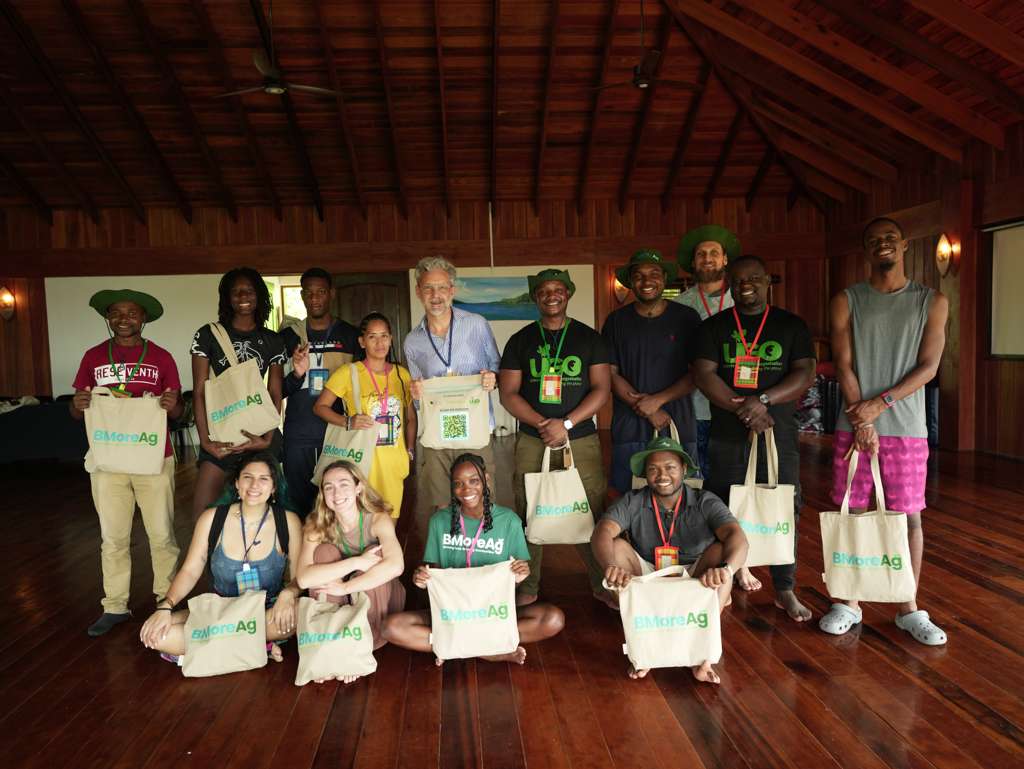
Meet-and-greet between organisations and igniters.
The first workshop we brought, drew on the Storytelling fellowship programme and took place during our visit to the Kalinago Territory. Surrounded by Dominica’s natural landscape, the session invited participants to begin with a simple, yet powerful icebreaker known as “the human knot”. Standing side by side, Igniters worked to untangle themselves through trust, communication, and teamwork. As the exercise continued, we quietly placed small yellow ducks on their heads or shoulders, adding a playful layer of complexity. The ducks later became a visual metaphor that grounded our discussion.
The session then shifted to “knee-to-knee”, a structured listening practice in which pairs shared personal experiences without interruption, reaction, or questions. Guided by the prompt, “How was your childhood different from your parents’?” (Photo 3) Participants reflected on generational change and the systems that shaped their and our lives. The exercise fostered attentive listening and mutual understanding, laying the groundwork for deeper dialogue throughout the week.
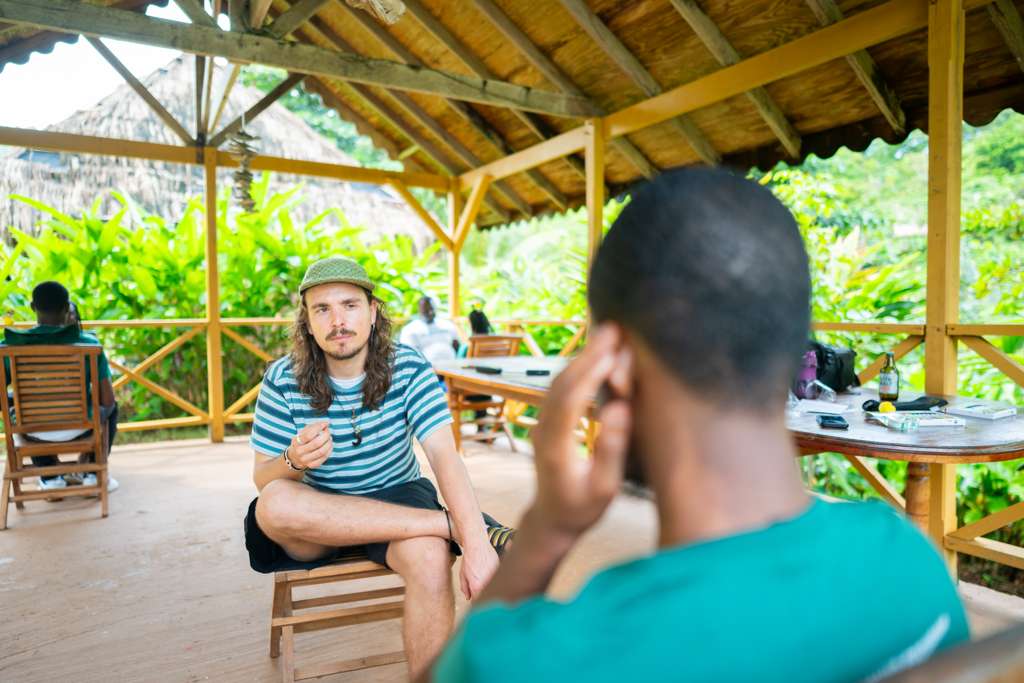
The “knee-to-knee” activity in teams of two.
During the closing analysis, discussions ranged widely, yet one theme remained particularly resonant: Otherness and its importance. The need to recognise animals, plants, water, land culture, and more as integral parts of interconnected systems. We imagined a world in which humans are not always positioned at the centre, but rather as one element within a broader whole. The small yellow duck re-emerged as a visual metaphor — reminding us that “otherness” extends beyond the person in front of us to include the non-human world that sustains and accompanies us. It became a straightforward yet striking symbol of attentiveness, care, and relational responsibility. Our visit to the Kalinago Territory left us with stories of resistance, personal memories, and collective reflection.
On another day, the second workshop took place at Free Up Farm, a permaculture space dedicated to climate resilience. Drawing on the Young person’s guide to systems change, this session explored systems thinking and systemic transformation in greater depth. Participants reflected on virtuous citizenship, the core elements of a system, and the interaction between power and leverage points. The theoretical discussions were followed by interactive card games grounded in the iceberg model and “why ladder” prompts. These activities encouraged participants to look beneath surface events and interrogate the underlying patterns and mindsets shaping them.
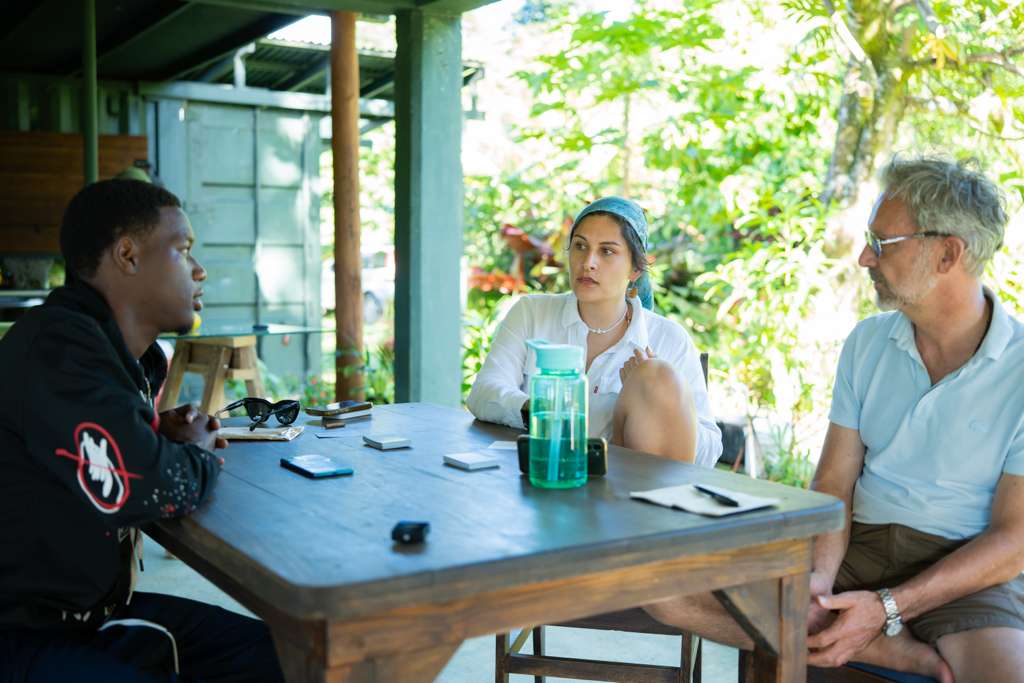
Card game dialogue between igniters.
The third workshop closed the retreat with “Compliment Rain”. Each person stepped into the centre while others offered one or two words—sometimes a short phrase—naming a unique quality we had noticed in them. This workshop worked as a space to honour our emotions and be present, which became a final moment that grounded the sense of community we had built over the week. Listening to how others described us, gently unsettled the fixed stories we hold about ourselves, and reminded us that our presence in a group is often experienced differently. This was a powerful way to recognise and celebrate one another.
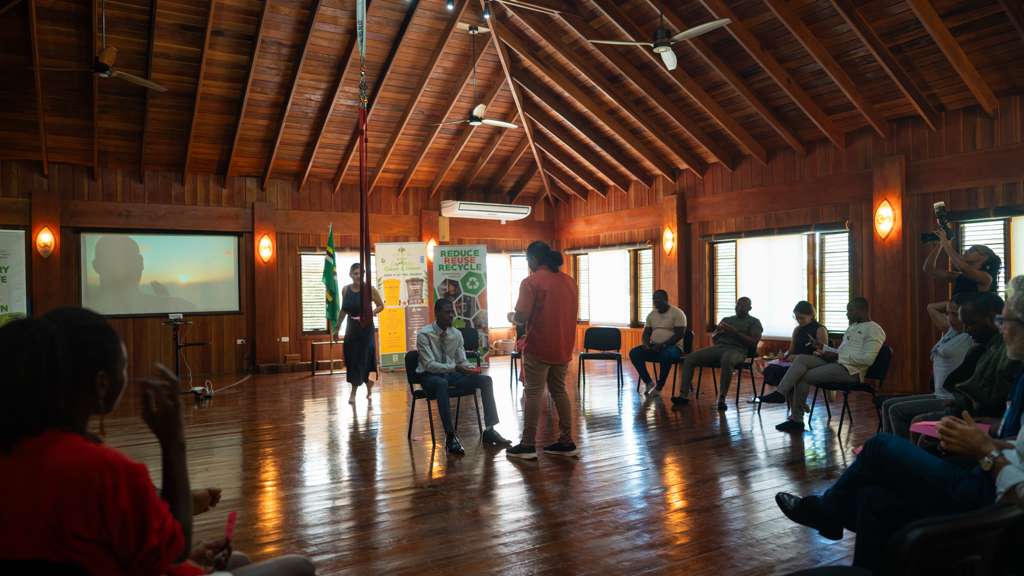
Compliment Rain session.
These and the rest of the workshops throughout the week explored how analysis and experience inform one another in the practice of change. That is why, in the spring of 2026, once the retreat part of the Catalyst Programme is finished, the virtual fellowship starts. This will be focused on systems change, digital equity, and food systems, and aims to continue with the impact beyond the island’s shores. Fellows will sharpen both transferable and technical skills while advancing the projects and alliances seeded in Dominica.
By bringing systems thinking into dialogue with place, embodiment, and storytelling, all the efforts invested will soon be translated into tangible value: a stronger network of young leaders, shared toolkits/methods, cross‑regional collaborations, and concrete youth‑led projects ready to be pitched to partners, funders, and policymakers. This partnership showed that when grounded, youth‑led storytelling meets systems thinking, the result is not just a workshop but an ecosystem of change—rooted in Indigenous wisdom, powered by young people, and sustained by a global community.