
An unexpected Italy
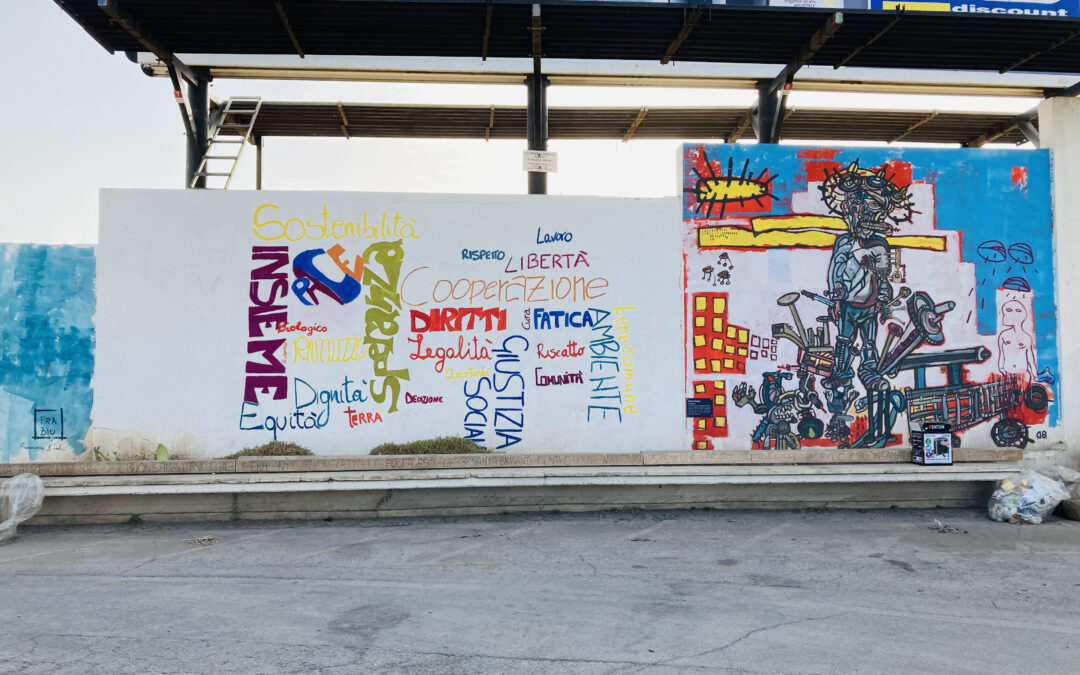
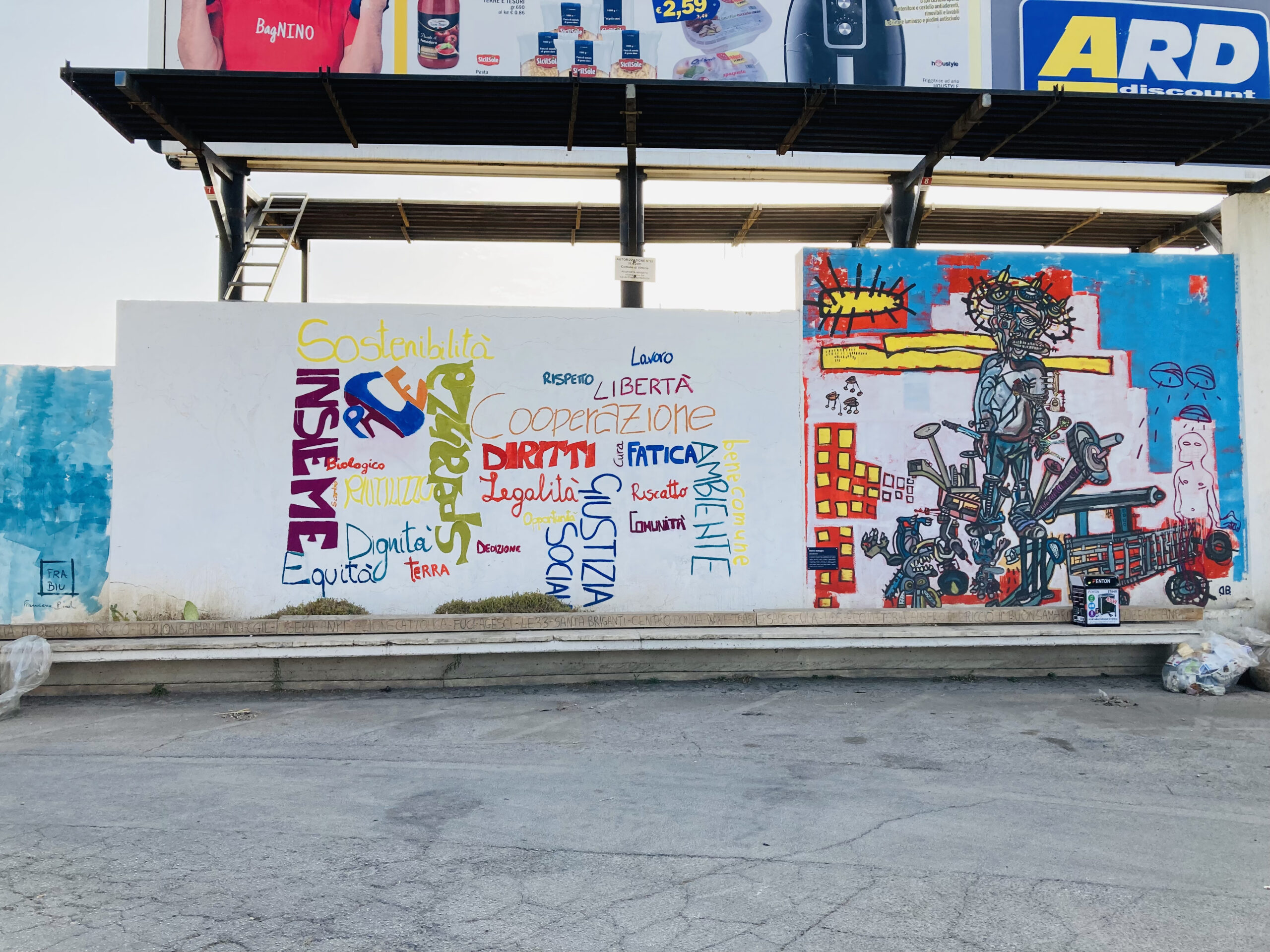
Far from the crowded cities and mainstream tourist routes, a different Italy emerges, a country marked by silence and resilience, where transformation is not always visible for an external visitor.
In rural areas of the peninsula, old villas once belonging to criminal families are now home to agricultural cooperatives. Fields controlled by mafia bosses have been returned to productive use. In the suburbs of Naples or on the outskirts of Venice, buildings confiscated by the state have been reopened as youth centres, women’s shelters, or community hubs. Some retain the scars of violence and abandonment waiting for a future renovation; others have already become places of work and education.
These sites are the outcome of a long and complex process that involves law, civic engagement, and a sustained effort to reimagine what once symbolised power through intimidation. They represent a shift, from private control based on fear to public utility rooted in a deep sense of community.
At the center of this process is Libera, a national network founded in 1995 to coordinate the social reuse of assets confiscated from organised crime. Rather than treating justice as a purely institutional matter, Libera frames it as a collective practice: embedded in schools, fields, cooperatives, and everyday decisions.
It is a form of reconstruction – legal, social, and economic – that reshapes territories historically shaped by silence and illegality.
The roots of a problem
To understand the emergence of a movement like Libera, it is necessary to look back to Italy in the 1970s and 1980s. During this period, organised crime was becoming increasingly entrenched, not only the Sicilian, commonly stereotyped, Mafia, but many others. As the ‘Ndrangheta in Calabria, the Camorra in Campania, and other criminal networks throughout the country. These organisations extended their influence beyond violence and revenge. They were, and are still, integrated into local economies and politics in their highest circles, providing employment, favours, and protection to communities in exchange for silence and complicity.
During the latest 70s, Pio La Torre, a Sicilian politician and anti-mafia activist, identified a crucial aspect of mafia power: it was rooted in control over assets – land, buildings, and wealth – that sustained their influence beyond immediate acts of violence. In 1980, La Torre presented legislation aimed at confiscating these properties from mafia members, effectively removing their economic base and disrupting their social control. Shortly before the law was enacted, La Torre was assassinated on April 30, 1982. His death marked a tragic but crucial moment.
The law was passed that same year, formally recognising for the first time mafia association as a distinct crime and granting the judiciary new powers to seize criminal assets.
This legal framework represented a significant advancement in Italy’s fight against organised crime, but it was only the first step in a long and complex process.
When property becomes purpose
By the early 1990s, thousands of properties had been confiscated from Italy’s criminal organisations. However, many of these assets remained unused as La Torre’s law was not providing any guidance about the reuse of the assets. Empty villas fell into disrepair, farmland was left unattended, and entire communities found themselves in a difficult position. Some residents remembered the mafia’s presence as a source of access and informal support, and they questioned what would replace that. The confiscations, while legally significant, had yet to translate into social transformation.
It was in this context that Don Luigi Ciotti, a priest and social activist from Turin, brought a new perspective. Already engaged in combating drug addiction and social exclusion, he recognised that legal measures alone could not dismantle the complex web of mafia influence. What was needed was an active civil society, capable of reclaiming and repurposing confiscated goods for the common good.
With these ideas, in 1995, Don Ciotti founded “Libera, Associations, Names and Numbers Against Mafias.” a network uniting thousands of associations, schools, and cooperatives committed to the goal of giving a new life to these buildings and lands. Libera’s mission was clear: to return confiscated assets not as empty symbols, but as active, working spaces, farms, cooperatives, cultural centres, social housing and places of education and remembrance.
When land becomes liberation
Today, after 30 years, Libera coordinates a broad and growing network of over 1,600 entities across Italy. The organisation’s focus remains on transforming former mafia properties into hubs of social renewal and economic opportunity.
For example, in Corleone, a town long associated with mafia history, the “Placido Rizzotto Cooperative” cultivates organic grains and legumes on land seized from notorious crime figures. The products, including pasta, chickpeas, and olive oil, carry not just a brand, but a message: these are goods grown on land reclaimed from criminal power and restored to the community.
In Bari, the “Terre di Puglia, Libera Terra cooperative” manages olive groves and vineyards, producing award-winning wines and oils. Beyond quality products, these enterprises create stable employment in regions where legal work is scarce.
In northern Italy, near Lecco, a villa once owned by mafia interests now functions as a youth center, providing after-school programs and civic education workshops. In Rome, a confiscated complex serves as a shelter for women escaping domestic violence, offering support and empowerment. Meanwhile, in Palermo, Libera supports educational initiatives and helps young entrepreneurs launch ethical businesses on reclaimed lands.
Each of these places tells a distinct story. Together, they form a network dedicated to rebuilding community life, restoring dignity, and offering valid alternatives to the silence and fear once imposed by organised crime.
From memory to action
Libera’s work extends beyond property and employment; it is deeply rooted in collective memory and civic engagement. Every year on March 21st, the “Day of Memory and Commitment” unites people across Italy to honour the more than thousand victims of mafia violence. This includes judges, journalists, police officers, activists, and countless ordinary citizens who refused to remain silent.
The ritual of reading their names aloud serves as a powerful act of remembrance and resistance.
At the same time, Libera actively promotes education and participation. Through schools, youth summer camps, and training programs, it fosters awareness of legality, anti-corruption, and democratic values. Materials are available in multiple languages, and international volunteers are welcomed to join the effort. Internship opportunities and summer camps provide hands-on experiences, connecting young people with communities working toward a different future.
These programs do more than educate: they offer a concrete chance to engage, learn, and contribute to lasting change.
A path toward justice, rooted in the ground
The experience of Libera demonstrates that social transformation is gradual but achievable. The battle against mafia influence is not fought solely in courtrooms; it is won in vineyards, classrooms, cooperatives, and through daily commitments to justice.
In a country grappling with corruption and inequality, Libera offers a model of hope. Justice can indeed grow from the ground up. That lands once seized by criminal forces can become productive fields and community spaces. That fear and silence can be replaced by work, dignity, and the strength of a renewed social fabric.
If you’d like to learn more or get involved: